Precision Matters: Serial Number Laser Etching
- dreamlaserinnovati
- Apr 20
- 4 min read
When it comes to marking products with serial numbers, precision is not just a preference - it’s a necessity. Whether you’re managing a large manufacturing line or a small business producing custom parts, the accuracy and durability of your serial number markings can impact everything from inventory control to legal compliance. That’s why I want to share insights about serial number laser etching, a technology that delivers unmatched precision and reliability.
Why Serial Number Laser Etching Stands Out
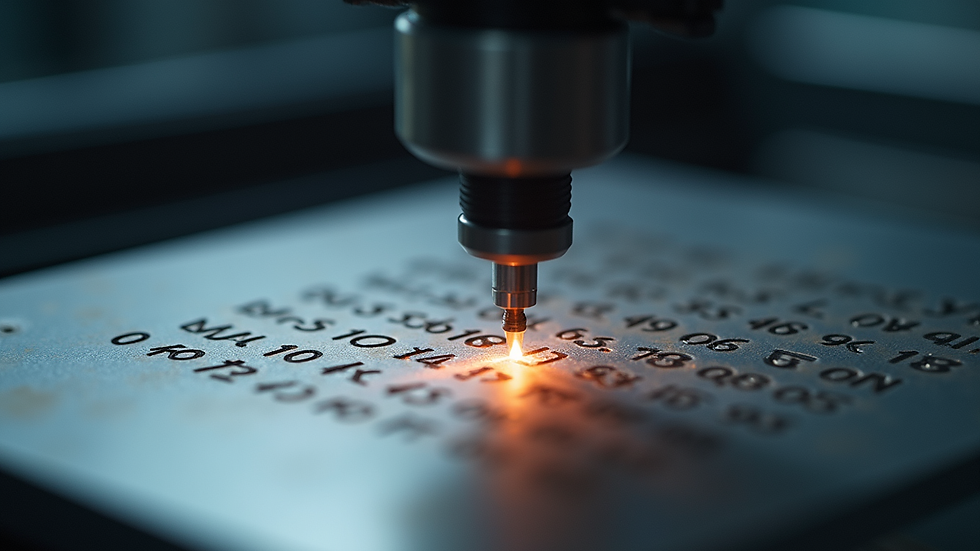
Serial number laser etching is a process that uses focused laser beams to engrave or mark serial numbers directly onto a product’s surface. Unlike traditional methods such as stamping or ink printing, laser etching offers several key advantages:
High precision and clarity: The laser creates crisp, clear markings that are easy to read and scan.
Permanent and durable: The marks resist wear, corrosion, and fading, ensuring long-term traceability.
Non-contact process: Since the laser doesn’t physically touch the material, there’s no risk of distortion or damage.
Versatility: It works on a wide range of materials including metals, plastics, glass, and ceramics.
Speed and automation: Laser etching can be integrated into production lines for fast, repeatable results.
For manufacturers, these benefits translate into better quality control, improved product authentication, and compliance with industry regulations. You can trust that every serial number is etched with consistent depth and legibility, even on complex shapes or small surfaces.
How Serial Number Laser Etching Improves Your Production Workflow
Integrating serial number laser etching into your production process can streamline operations and reduce errors. Here’s how:
Automated data input: Serial numbers can be programmed into the laser system, eliminating manual entry mistakes.
Fast marking cycles: The laser can etch serial numbers in seconds, keeping up with high-volume production.
Consistent quality: Each mark is uniform, which helps with automated scanning and tracking downstream.
Minimal maintenance: Laser systems require less upkeep compared to mechanical stamping tools.
Customization options: You can easily change serial number formats, add logos, or include QR codes without tooling changes.
By adopting laser etching, you reduce downtime and improve traceability. This is especially important for industries like aerospace, automotive, electronics, and medical devices where precise identification is critical.
Do I need an FFL to engrave firearms?
If your business involves engraving serial numbers on firearms, you might wonder about legal requirements. An FFL (Federal Firearms License) is generally required for manufacturing, importing, or dealing in firearms. However, when it comes to engraving or marking firearms, the rules can vary:
Licensed manufacturers and dealers: Usually must have an FFL to engrave serial numbers as part of firearm production.
Custom engraving services: May require an FFL if the engraving involves adding or altering serial numbers.
Compliance with ATF regulations: The Bureau of Alcohol, Tobacco, Firearms and Explosives (ATF) mandates that serial numbers be permanent and legible.
It’s essential to consult legal experts or the ATF directly to ensure your engraving practices comply with federal and state laws. Using laser etching for serial numbers on firearms can meet the durability and clarity standards required, but licensing is a separate matter.
Choosing the Right Laser Etching Technology for Your Needs
Not all laser etching systems are created equal. Selecting the right technology depends on your materials, production volume, and precision requirements. Here are some common types:
Fiber lasers: Ideal for metals and plastics, offering high speed and fine detail.
CO2 lasers: Best for organic materials like wood, leather, and glass.
UV lasers: Provide ultra-fine marking with minimal heat impact, suitable for delicate surfaces.
Consider these factors when choosing a system:
Material compatibility: Match the laser type to your product materials.
Marking speed: Ensure the system can keep pace with your production line.
Resolution and detail: Higher resolution is crucial for small serial numbers or complex fonts.
Software integration: Look for systems that support easy data input and automation.
Service and support: Reliable technical support helps maintain uptime.
Investing in the right laser etching technology will pay off in consistent quality and operational efficiency.
Best Practices for Serial Number Laser Etching
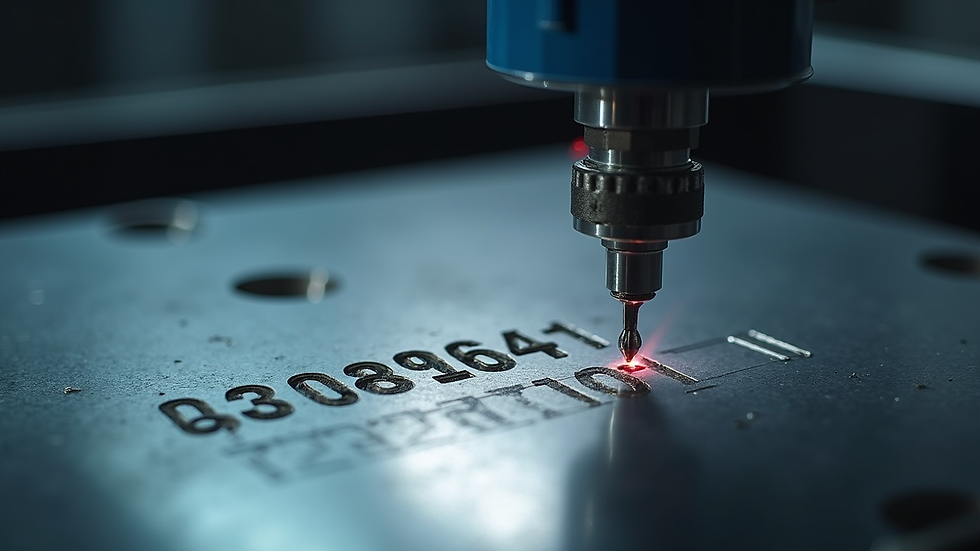
To get the most out of your laser etching process, follow these practical tips:
Prepare the surface: Clean and smooth surfaces ensure better laser absorption and clearer marks.
Optimize laser settings: Adjust power, speed, and frequency for each material to avoid over- or under-etching.
Test before production: Run sample etches to verify legibility and durability.
Use standardized fonts: Choose fonts that are easy to read and compatible with barcode or QR code scanners.
Maintain equipment regularly: Keep lenses and mirrors clean to preserve laser quality.
Document serial number formats: Maintain records for traceability and compliance audits.
By implementing these steps, you can avoid common pitfalls and ensure every serial number is etched perfectly.
Why Precision in Serial Numbering Matters to Your Business
Serial numbers are more than just identifiers - they are critical for tracking, warranty claims, recalls, and anti-counterfeiting measures. Poorly marked or illegible serial numbers can lead to:
Inventory errors: Misplaced or untraceable products.
Regulatory fines: Non-compliance with industry standards.
Customer dissatisfaction: Difficulty verifying authenticity or warranty status.
Security risks: Increased vulnerability to counterfeit products.
Using laser etching for serial numbers guarantees precision and permanence. This technology supports your business goals by enhancing product integrity and customer trust.
If you want to elevate your product marking with precision and reliability, consider laser etching as your go-to solution. It’s a smart investment that pays dividends in quality, compliance, and efficiency. Reach out to experts who can tailor laser engraving, etching, and cutting services to your unique needs and watch your production quality soar.


Comments